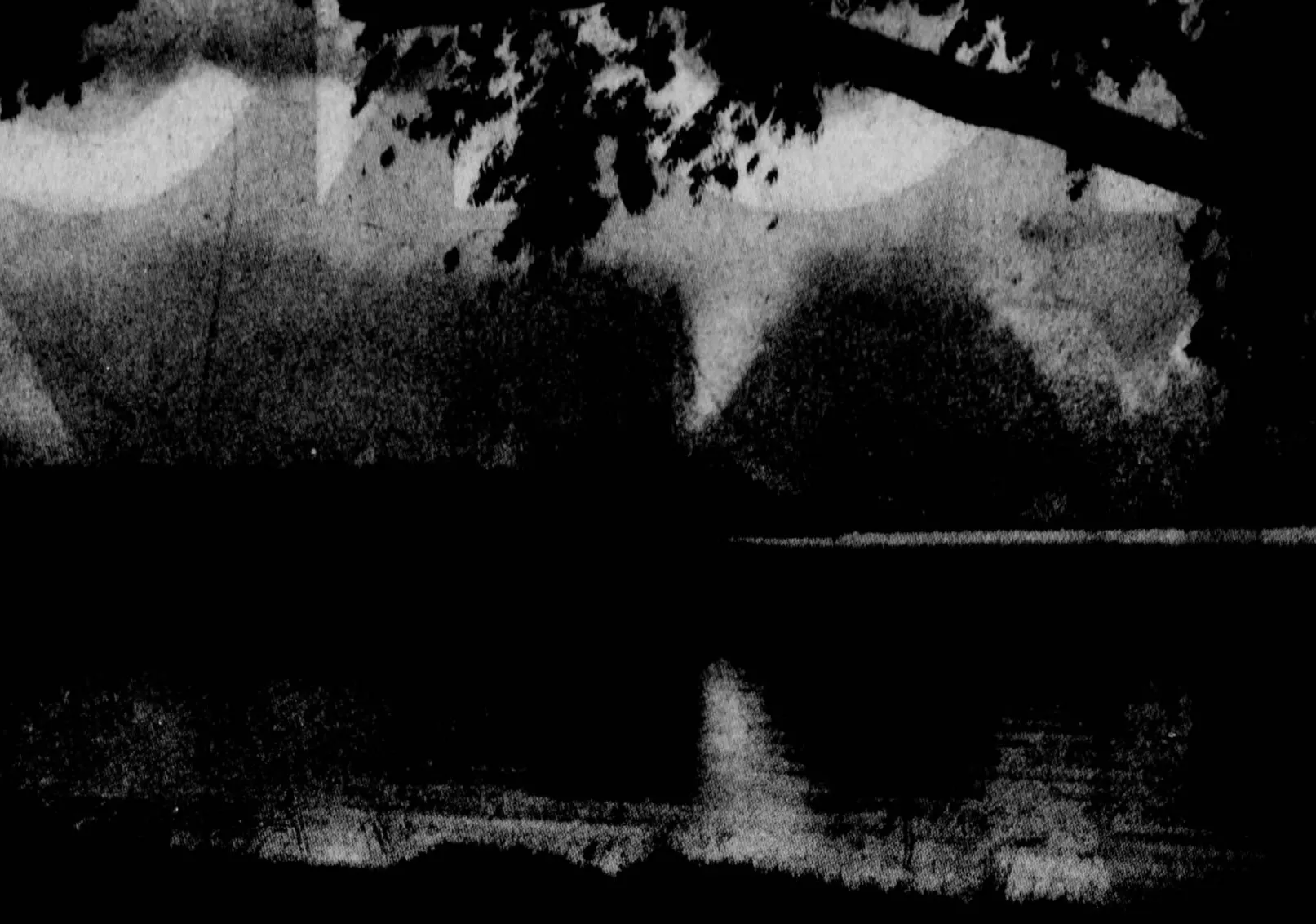
On a Saturday evening in the summer of 1970, a funnel crossed Lake Miltona, took the depot apart over the town, and left Miltona a story it still tells every July.
Ask in Miltona about the tornado and nobody starts with the weather. They start with where they were standing.
The date is not in dispute. Saturday, July 18, 1970, early evening, about 7 p.m. The city's own history tells it plainly: a funnel cloud formed over Lake Miltona, moved across the Lake Miltona Golf Club, and touched down in the city. The federal record agrees on the shape of it. The National Oceanic and Atmospheric Administration's tornado database lists the storm as an F2, with a path three miles long and a hundred yards wide, five people injured, and nobody killed. Local accounts put the ground time at about five minutes. Five minutes was enough.
The first alarm was the wrong one, and it may have saved the town. The funnel carried so much dust that it hid itself and looked like smoke, and somebody called in a fire. Kevin Lee, who was in high school in 1970 and later became Miltona's city clerk, remembered the fire siren going off at 7:02 p.m. and walking over to the fire hall to see what was burning. What was coming was worse than a fire, but the siren had people up, looking around, and awake to the sky. The Douglas County Historical Society, marking the storm's 55th anniversary in July 2025, said the same thing: the fire alarm may be why no one died.
What the record says
The documented damage reads like a list of everything a small town cannot afford to lose. The tornado destroyed or damaged the Soo Line depot, the lumberyard, the café, the gas station, and the grain elevator, along with 11 homes and several farms east of town. The counts differ slightly by source. The Echo Press, in its anniversary coverage, puts it at 11 homes and 15 businesses; the Historical Society's anniversary post says 14 businesses. Nobody argues about the shape of the path: a block and a half wide, nearly three miles long, running from the city dump on the west side of town through the business district and out to the farms.
The depot took the worst of it, and the depot is where the storm left its strangest receipt. Depot papers turned up as far east as Rice, Minnesota, roughly 80 miles away, carried there on the wind. Five people were injured, none seriously, though four were treated at hospitals in Parkers Prairie and Alexandria. Damage was put at about $500,000 at the time. Civil Defense crews were in town within 45 minutes. The municipal liquor store became a command post, and when the town's restaurant turned out to be among the wrecked buildings, local women set up cooking at the VFW so cleanup crews had a place to eat.
What people remember
The record is one thing. The memories, posted publicly under the Historical Society's anniversary photographs in July 2025, are another, and they are better.
Patty watched from a cabin on Lake Irene, close enough to see into the funnel while it was still white. "We saw the depot flying around in the funnel," she wrote (Patty, July 2025). Elaine watched from the north side of Lake Miltona and saw it "sucking up Lk Miltona water," then come up the east lake access and set down in the Robert Henning barnyard, covering a house in mud (Elaine, July 2025). Gen had the highest seat in the county: she watched "from the top of a load of hay," north of the old Boat works (Gen, July 2025).
Jo was 17, on her grandfather Walter's farm about seven miles east of town. Her grandfather read the clouds, and the family sat in the car, ready to outrun it. She grabbed her box of movie-star pictures and a Colorado cowboy hat. She remembered a cement-block garage that "literally exploded," a hay wagon's axle landing on top of the wagon, straw driven into a refrigerator, and "the little yellow depot" picked up and dropped whole in a swamp (Jo, July 2025). That last detail is memory, not record: Kevin, who collected Soo Line paperwork near the depot afterward, remembered that only the foundation was left (Kevin, July 2025). Both versions survive because both are true to the people who hold them. A building can be destroyed and still be seen, whole, in the air, by somebody who loved the sight of it at the end of the street.
Judy's father and her husband were out fishing on Lake Miltona when the funnel formed. They saw it and got off the lake in time (Judy, July 2025). A Star Tribune writer, Jim Shoop, was fishing on Lake Carlos that evening and wrote a first-person account of the storm for his paper. Half the county, it seems, was on the water that Saturday. The lake gave them a clear view and a fast way home.
The town that came back
Miltona did not hold a memorial. It held a party. Within a year of the storm, six new homes stood in town and new businesses lined Main Street. Kevin Lee called the rebuilding "kind of like an instant urban renewal," a line the Echo Press has carried in its anniversary coverage ever since. In 1971 the town started the Miltona Tornado Recovery Festival to mark the comeback, and the festival never stopped. It runs today as Tornado Days, every mid-July, close to the anniversary of the evening the funnel came across the lake.
That is the most Miltona fact in the whole story. The storm took the depot, the café, the lumberyard, and the elevator in about five minutes, and the town answered by putting the date on the calendar and celebrating it. The Soo Line was the Minneapolis, St. Paul and Sault Ste. Marie Railroad, named for the Soo at Sault Ste. Marie, and its little yellow depot, built in 1912, had been the town's front door for grain, mail, and passengers for almost sixty years. The depot never came back, and the Soo Line era in Miltona effectively ended that evening. But every July, when the town fills up for Tornado Days, the funnel is the guest of honor.
Visiting the story
Tornado Days runs each mid-July in Miltona, and the Douglas County Historical Society in Alexandria holds the photographs and the anniversary record, including the eyewitness accounts quoted here. The lake the funnel crossed is 5,731 acres (DNR), and on a calm Saturday evening in July it is hard to picture what came over it in 1970. The people who were here do not have that problem.
Spot an error? Read our corrections policy.